
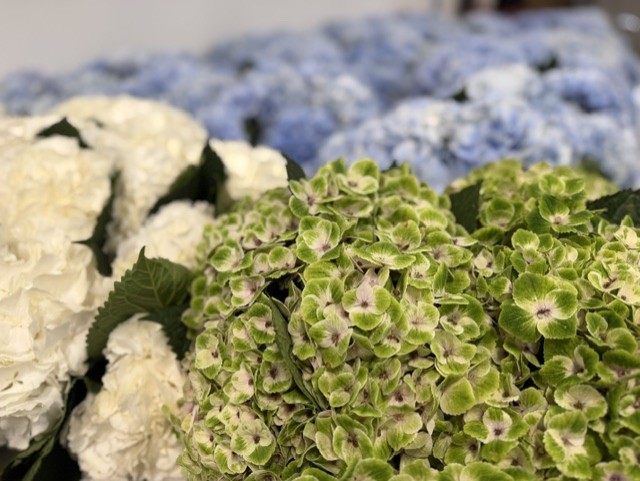
Few flowers make a bigger impression than hydrangeas – but few are also as misunderstood. The secret to long-lasting, beautiful blooms isn’t complicated: it all comes down to proper hydration. Learn the simple handling techniques that can dramatically improve performance and reduce waste in your shop.
The name Hydrangea comes from the Ancient Greek words hydor (water) and angeion (vessel or pitcher). While many believe the name refers to the flower’s high water-requirement, the more widely accepted explanation is that the unopened flower buds resemble an ancient Greek water vessel. Either way, water defines the hydrangea – both in name and in performance.

Tom Jennings
Owner, Green Mountain Floral SupplyProper Stem Preparation
Proper stem preparation is one of the most important steps in extending the vase life of hydrangeas.
- Always make a fresh cut using a clean, sharp floral knife.
- Avoid pruning shears or clippers whenever possible. They compress and crush the vascular tissue, reducing the stem’s ability to absorb water.
- Do not cut directly through the stem nodes (“knuckles”). These thicker portions of the stem can slow water movement. Make your cut between the nodes whenever possible.
- Place stems into hydration solution immediately after recutting to minimize air entering the vascular system. At Green Mountain Floral Supply, our preferred all-purpose hydrating solution is Chrysal RVB.
Hydration Is Everything
Unlike many cut flowers, hydrangeas have exceptionally large flower heads with a high transpiration rate. They lose moisture rapidly, making continuous hydration essential.
Simply recutting a stem and placing it in water does not guarantee that the flower is actually taking up solution. If the vascular tissue is crushed, blocked by bacteria, or cut improperly, water movement through the xylem is restricted. The result is a bloom that wilts even though it is sitting in a full bucket of hydrating solution.
Sanitation Matters
Water quality is just as important as cutting technique.
Always begin with clean buckets, clean tools, and fresh hydration or flower food solution. Bacteria multiply rapidly in dirty containers and form biofilms inside the stem, clogging the xylem and reducing water uptake. Even perfectly cut stems cannot hydrate properly if bacterial contamination is present.
Maintaining clean buckets and changing solution regularly are among the simplest ways to improve hydrangea performance.
Pre-hydrated for Better Performance
One advantage of purchasing hydrangeas from Green Mountain Floral Supply is that most varieties are shipped in Chrysal RVB. Shipping in this solution keeps stems hydrated throughout transit, reduces moisture stress, and minimizes the recovery period once the flowers arrive. Because the hydration chain has not been interrupted, florists can often process these hydrangeas more quickly with excellent results.
Reviving Wilted Hydrangeas
One of the unique characteristics of hydrangeas is their remarkable ability to recover from wilting when properly rehydrated.
If blooms begin to wilt:
Recut the stem with a sharp knife and submerge it – flower heads and all, stem first, in room-temperature water. Leave them for several hours to rehydrate.
The Bottom Line
Hydrangeas are often considered challenging flowers, but their care is actually straightforward. Nearly every hydration problem comes down to one simple question:
Is the stem truly taking up water?
By using proper cutting techniques, avoiding crushed stems and stem nodes, maintaining excellent sanitation, and ensuring continuous hydration, florists can dramatically improve vase life and reduce losses. When handled correctly, hydrangeas consistently deliver the lush, premium blooms that make them one of the most popular flowers in the floral industry.