
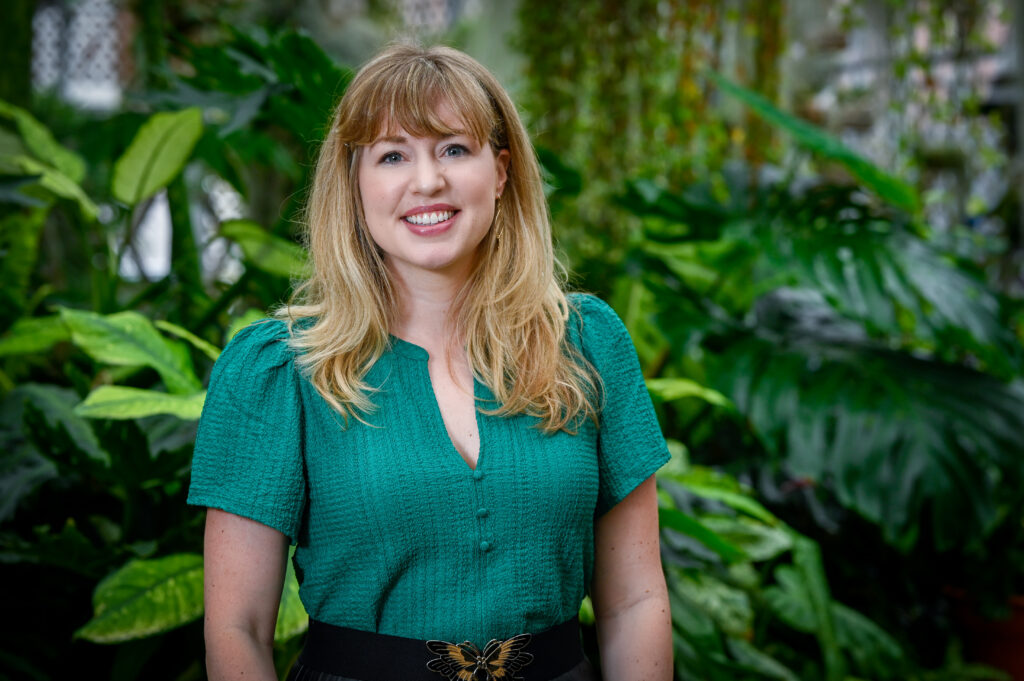
This article was developed following a virtual meeting in March 2026 between Dr. Amanda Solliday, Senior Manager, Sustainabloom, and Clara Weis, Sustainability and Community Impact Intern, Green Mountain Floral Supply.
Earlier this year, Dr. Amanda Solliday was welcomed to the American Floral Endowment as the new Senior Manager of Sustainabloom, and I recently had the opportunity to speak with her about her role, her background, and the future of sustainability in the floral industry.
Dr. Solliday holds a Ph.D. in horticulture from North Carolina State University, where she focused on horticultural science research. She also brings experience from her time at the Environmental Protection Agency (EPA), where she explored intersections between sustainability and biology.
During our conversation, we covered a range of emerging and important topics that are growing across the floral supply chain: including plastics, education, and broader sustainability trends. I was able to ask specific questions about our operations at Green Mountain Floral Supply and gain insight into how Sustainabloom’s work can support floral wholesalers like us.
CW: If someone didn’t know anything about Sustainabloom, what would you say?
AS: I would say that the program is designed to encourage people who work with flowers to learn more about sustainability and find ways that sustainable practices can help strengthen their business. I’ve found that sustainability as an ethos works best when we are all learning from each other. It’s a challenge, because what might work for one business may not work for another, but that’s also part of the fun! Sustainability also requires creativity.
CW: We hear from some of our sustainably minded floral customers that they wonder how they can reduce their plastic use. How do you think plastics are changing and what can we do now in the current landscape?
AS: Plastics remain one of the floral industry’s toughest topics. One practical step is to explore alternative materials and open conversations with suppliers about your sustainability goals and see what options they offer. Some regions also offer local pickup services for non‑commercial recycling. Simply asking questions and communicating your intentions can lead to new options and partnerships.
CW: We have future plans to create an educational program for local retail florists. As a wholesaler, what do you recommend we share about sustainability?
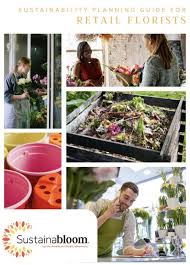
AS: Sustainabloom’s Sustainability Planning Template for Retail Florists helps businesses evaluate their own operations and identify areas for improvement. For wholesalers, it’s valuable to engage florists directly: ask about their customer preferences, the practices they’ve adopted, and even small operational details like tracking utility bills to establish baselines. Understanding what kinds of waste are being produced is essential. Measuring, counting, and reducing waste are tangible steps every florist can take toward meaningful progress.
CW: How important is sustainability to retail flower customers?
AS: This is a fairly active area of consumer research! The latest studies indicate that more floral consumers than not value environmentally responsible flowers, which can include practices such as local production, composting, and reduced packaging. This is particularly true for younger flower buyers, such as Gen Z customers. One recent comprehensive report I’ve seen in this area is the Floral Marketing Fund’s U.S. Consumer Perceptions & Willingness to Pay for Sustainable Environmental Practices in the Floral Industry.
CW: What tips do you have in creating sustainability goals for a business?
AS: Creating priorities can feel daunting because sustainability covers so much ground. A helpful starting point is to conduct both external and internal materiality assessments, looking outward at industry expectations and inward at your own business realities. From there, creating clear and easy to understand goals will allow your company to focus on what is important to you. The more specific and understandable your goals are, the more achievable they become.